The transatlantic slave trade was like no other.


Transatlantic trade began around the end of the 15th century upon Portuguese conquest across the Atlantic Ocean, which was followed by the Spanish as well as Christopher Columbus’ Caribbean conquest.

However, the transatlantic slave trade was like no other, considering:

1.) its scale and duration,
2.) the victimization of slaves who were black African men, women, and children, and
3.) the “intellectual legitimization attempted on its behalf” consisting of an anti-black ideology and the legalization of such an organization.

Considered as the first “system of globalization” this particular slave trade covered Africa, the Americas, Europe, the Caribbean, and the Indian Ocean making it one of the largest deportations in history with significant world economic implications. Notwithstanding, it was also considered by many, such as French historian Jean-Michel Deveau, as one of “the greatest tragedies in the history of humanity in terms of scale and duration”.
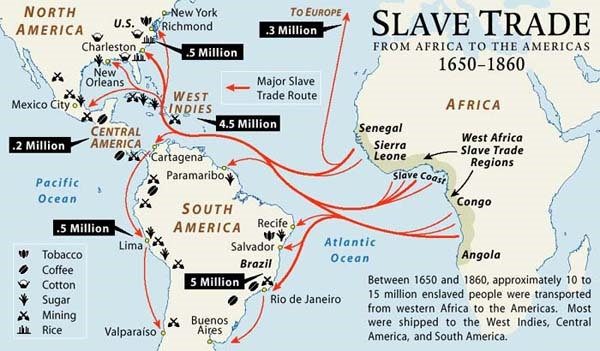
 

In the American colonies, Great Britain regulated the trading of African slaves from the mid-17th century through the Navigation Act of 1660 that allowed only English ships to enter the colonial ports, additionally that same year the British government chartered the “Company of Royal Adventurers Trading to Africa”, a company that would be dissolved thanks to the war between Britain and the Netherlands but would again be revived in 1672 under the “Royal African Company” (RAC). The British government again granted special protection the RAC that would transport 5,000 captive slaves per year between 1680 – 1686. As demand for slaves grew the company lost its monopoly and in 1698 the average number of slaves imported by British ships grew to 20,000 per year and Britain became the world leader in trafficked captive slaves by the end of the 17th century.


Comments

Popular posts from this blog

Slavery’s impact on regional rates of economic growth, the workings of the interstate slave trade.

The New History of Capitalism.

Enforcement Inefficiency.