The Middle Passage.
The Middle Passage was the journey from West Africa across the Atlantic Ocean to the West Indies lasting about three to four months. It would be one of the most arduous expeditions as it also served to erase the captive slave’s “sense of human dignity” as they were chained and shackled and forced to lay down in rows, “spoonways”, or on shelves across the ship. Furthermore, they were systematically dehumanized. Before boarding, the captives were stripped of any “physical connections” with their past and this would continue aboard the slave trading ships along the “Middle Passage”.
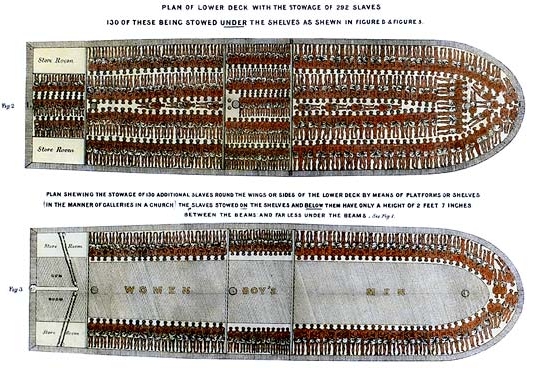
“At last, when the ship we were in, had got in all her cargo, they made ready with many fearful noises, and we were all put under deck, so that we could not see how they managed the vessel. … The stench of the hold while we were on the coast was so intolerably loathsome…. The closeness of the place, and the heat of the climate, added to the number in the ship, which was so crowded that each had scarcely room to turn himself, almost suffocated us. This produced copious perspirations, so that the air soon became unfit for respiration, from a variety of loathsome smells, and bought on a sickness among the slaves, of which many died – thus falling victims to the improvident avarice, as I may call it, of their purchasers.” – Olaudah Equiano
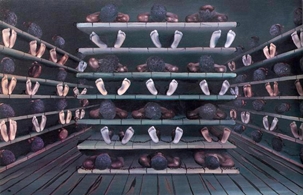
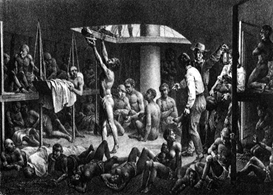
In such brutal and crowded conditions disease became rampant and spread even to the sailors and crew members. Scurvy, small pox, dysentery and other diseases were a result of the poor living and health conditions that also included blood, vomit, mucus, and diarrhoea. The captains would throw the sick people as well as anyone suspected of being ill overboard into the ocean. With such conditions and horror, let alone the unknown future, as many suspected the Europeans captured and enslaved Africans to kill and eat them, suicide was not off the table but required strategy as slave owners prevented it as much as they could. For instance, a special contraption called a speculum orum was used to force feed captives who attempted to starve themselves to death. Women, on the other hand were allowed more freedom and sometimes journeyed on deck but they nonetheless bore a double burden as they were brutally raped and sexually abused throughout the journey. However, they played an important in role in mutiny against the slave owners as they were given more liberty to move about thus giving them the opportunity to organize.
Despite attempts by the captain to keep as many African-slaves as possible, mortality rates were high. After the captive slaves were sold in the Americas they were put to labor “for the exploitation of mines and plantations of sugar cane, tobacco, coffee and cotton”. In the sugar cane plantations in the Caribbean life expectancy for the slave laborers was only five to six years and millions more were continually enslaved and trafficked over decades.


Comments
Post a Comment