Resistance and Rebellion.

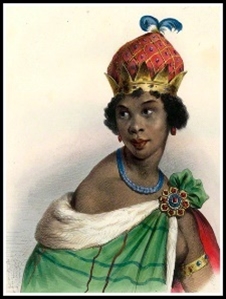
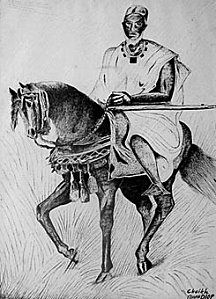
African rulers such as Queen Nzinga Bandi (c. 1583 – 1663) launched resistance campaigns against the slave trade and with the help of alliances fought against the Portuguese who controlled parts of what is now Angola. King Agaja Trudo of Dahomey (c. 1708-40) not only banned slave trading but also attacked European forts along the coast. In the late 18th century Muslim states in West Africa were also opposed to the slave trade and banned human trafficking. For instance, Abd al-Qadir (Abdel Kader Kane) a religious leader Futa Jallon (current day Guinea) threatened British slave traders that death would be the result of anyone who tried to acquire slaves from his country.
|
|
| Left: Queen Nzinga Bandi, Right: Muslim leader Abdel Kader Kane | |
There was also rebellion in the “middle passage” (the journey from West Africa across the Atlantic to the Americas and Caribbean) as Africans battled to the European crew and tried to gain control of the ships. The most famous example is that of the Amistad in 1839, in which Africans bound for Cuba aboard the Spanish ship, “Amistad”, broke free, and took control of the ship. Even though the original plan was to head back to Africa the sailors re-directed the ship to America where fortunately a trial took place where the courts found the Africans to have been captured and enslaved illegally and were thus determined “free-persons”. Other noteworthy rebellions and resistance campaigns were Tacky’s rebellion in 1960s Jamaica, Fedon’s 1790s revolution in Grenada, 1816 Barbados slave revolt by Bussa, and the 1831 slave revolt in Jamaica led by Sam Sharpe.


Comments
Post a Comment